 Credit Strategy
How to Read All Three of Your Credit Reports — Without the Jargon
Three bureaus, three reports, three slightly different pictures. Here's what each section actually means — and which lines deserve a closer look.
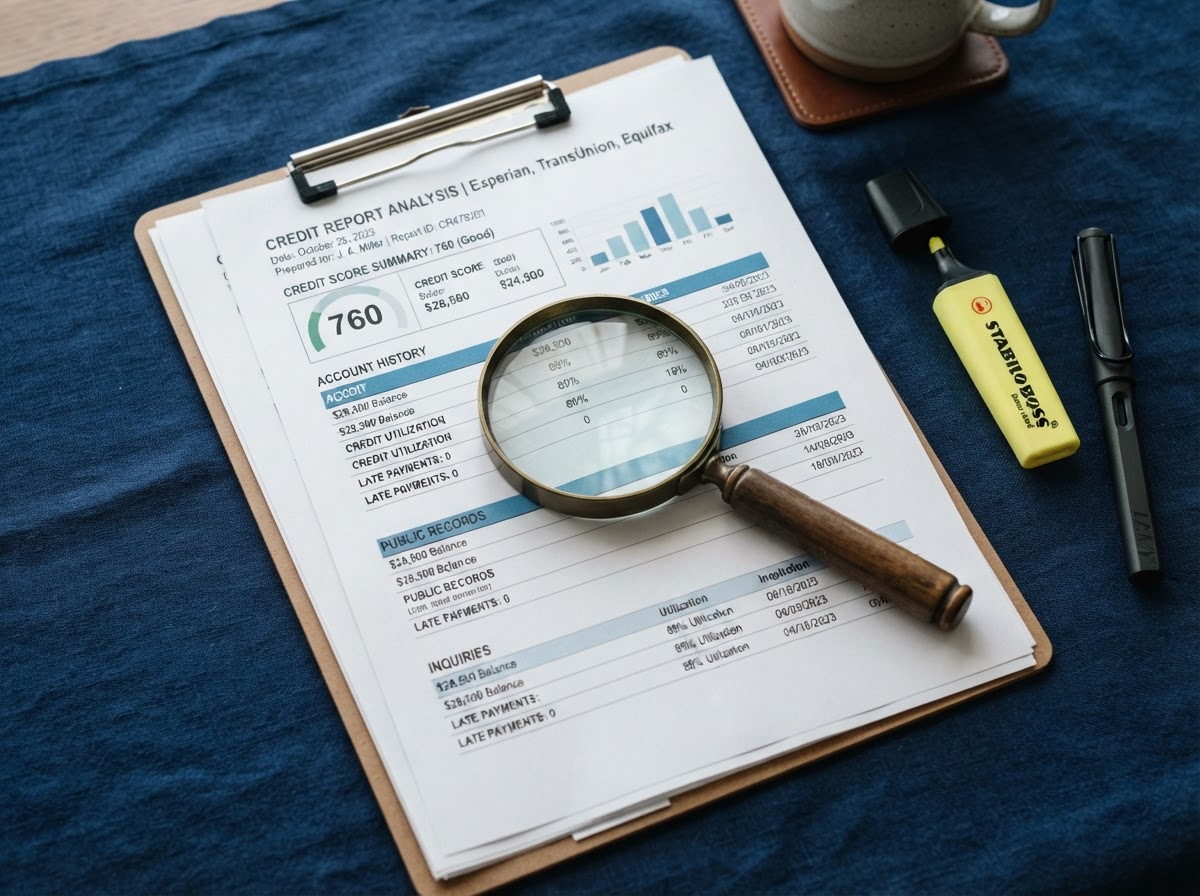
Your credit isn't one number — it's three. Equifax, Experian, and TransUnion each keep their own file on you, and they don't always agree. A late payment that shows on one may be missing from another, and a collection can report to a single bureau and not the others. Reading all three is the only way to see the full picture a lender sees.
Every report breaks into the same five sections: identifying information, account history, inquiries, public records, and collections. The account history is where most of the action is — each line shows the creditor, the balance, the credit limit or original loan amount, and a month-by-month payment grid. A single misreported “30 days late” on an otherwise clean account is a common, disputeable error.
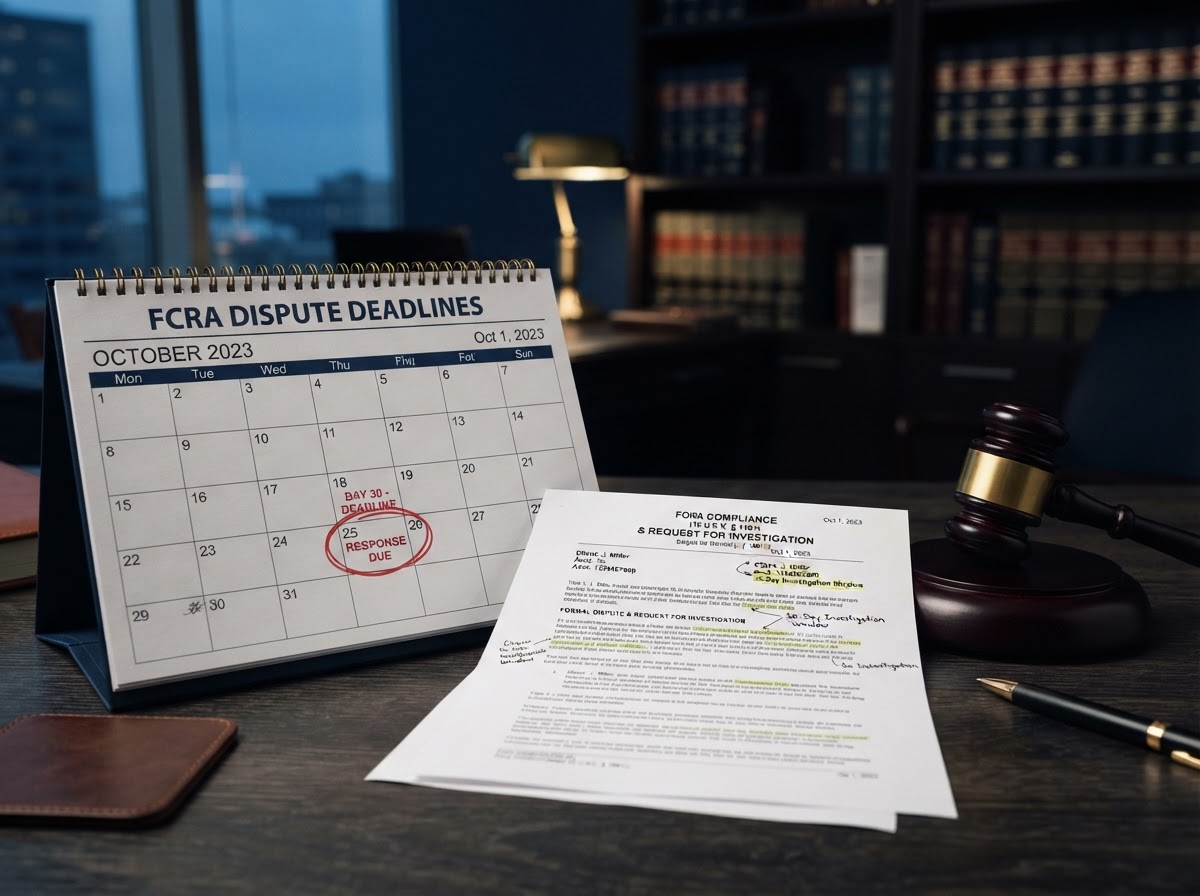
Pay attention to the details that look small but aren't: a misspelled name, a wrong address, an account that isn't yours, or a balance that's higher than what you actually owe. Any of those can signal a mixed file, identity theft, or a reporting mistake — and each is a legitimate basis for a dispute under the Fair Credit Reporting Act.
Inquiries split into two kinds. “Soft” inquiries — like when you check your own report or a lender pre-approves you — don't affect your score. “Hard” inquiries happen when you apply for credit and can weigh on your score for up to a year. An inquiry you don't recognize is worth questioning: it may be unauthorized, or it may be a sign someone applied for credit in your name.
Reading the report is the first step. The second is deciding what's accurate, what's outdated, and what's simply wrong — and a compliant dispute targets only the last two. A complete, accurate negative item stays for up to seven years by law. The work is in separating the removable from the permanent, and that's where a structured review earns its keep.